 Fans of An American in Paris will be able to watch the stage musical up close when it hits cinemas this week. The show premiered in 2014 at the Théâtre du Châtelet in Paris before transferring to the Palace Theatre on Broadway, where it became the most awarded musical of the 2015/16 season, including four Tony Awards.
With the music and lyrics of George Gershwin and Ira Gershwin, book by Craig Lucas and direction and choreography by Christopher Wheeldon, the production is inspired by the Oscar-winning MGM film and tells the impassioned story of discovering love in the ‘City of Light’ in 1945.
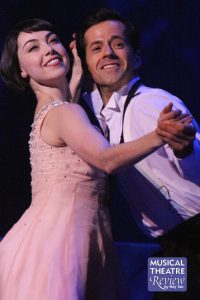
The film stars Tony Award nominees, New York City Ballet principal dancer Robert Fairchild as Jerry Mulligan and British Royal Ballet dancer Leanne Cope as Lise Dassin, reprising their roles from the original Broadway production and a company of more than 50 actors, dancers and musicians including Haydn Oakley as Henri Baurel, Zoë Rainey as Milo Davenport, David Seadon-Young as Adam Hochberg and Jane Asher as Madame Baurel.
LEANNE COPE played the role of Lise Dassin in Paris, New York and at London’s Dominion Theatre. The show was Leanne’s musical theatre debut and saw her perform on Broadway for the first time too.
Here she is in conversation with Musical Theatre Review’s Tal Fox.
There’s nothing like live theatre but do you think there are some advantages to watching the show on the big screen?
I think that the detail that you get to see when you can zoom in and go much closer, you can see people’s reactions much better. The acting is clear in the theatre, but when you’re up close you can see people’s reactions a lot more. On the dance side, you can almost see how much harder it is because with live theatre you can’t disguise the sweat.
Sometimes you forget you’re watching a theatre production because it’s so beautifully filmed and then suddenly you realise, oh yeah, this is live theatre, these people can’t run off stage and have their make-up touched up. It’s not a film, it is a live performance. It’s great that you get that reminder every now and then.
Picture: Roy Tan
Is there anything you want audiences to look out for when watching the broadcast?
That’s a difficult one. I don’t know if I want to tell people what to look for exactly. I think people who have seen the show before may see different things than they did in the theatre. What I think is so wonderful about the filming is that sometimes sets can look so two dimensional when they’re filmed up close but our set seems to still look three dimensional.
It still looks like we’re walking through the streets of Paris, the colours are beautiful, it sounds fantastic, the orchestra sounds amazing. I don’t know what I’d ask people to look out for, I guess just to see those smaller, tender moments that you can’t always see when you’re in row 20. So yeah, just the smaller moments.
How did you get involved in this show?
My involvement started nearly four and a half years ago. I first auditioned for Christopher Wheeldon while he was working at the Royal Opera House which is where I used to work with the Royal Ballet. He was creating a ballet there. He sent me a message on social media saying: “I heard you used to sing in the choir at school, would you like to sing for me?” I asked: “What for and what do you want me to sing?” He replied: “Can you learn, ‘The Man I Love’?” and he didn’t really expand on that.
So I learned ‘The Man I Love’, I listened to as many versions as possible and ended up singing for him between a double show of Swan Lake because that was the only time we could find. We found a shower cubicle in a dressing room because we thought the acoustics would be best there and that was my first audition for him. He was filming me on his iPhone with feathers in my hair, singing the song.
Then I went on to a couple more auditions, the final one was in New York and I got the part for the workshop. We workshopped the piece for six weeks and then we found out that the show would be taken to Paris to the Châtelet. We did the show there, then on Broadway and finally stopped in the West End, so it has been an amazing journey in an amazing four years.
Picture: Roy Tan
What was it like meeting Leslie Caron?
Amazing! She’s such a wonderful lady and in some ways, our paths were quite similar in that she was a ballet dancer and Gene Kelly saw her dancing and asked her to audition for An American in Paris. In some ways, with this being my first musical and that being her first picture, our stories are quite parallel.
She’s a wonderful lady and I met her totally by chance for the first time. Between our stint in Paris and just before we went to Broadway, I was going to watch my husband dance at the Royal Opera House and I spotted her and I thought, I’ve got to go and say hello because I may never get to meet this lady again.
I went to say hello to her and she said: “Are you Leanne?” I couldn’t believe that she even knew who I was. She’d heard about the show and she had just played the Châtelet herself the summer before so she knew An American in Paris was going to be put on stage. We met for tea a couple of days later, which was amazing. She told me her whole story of how she got the part and then her journey after that. She has worked and still does work with the greats in theatre and film and screen.
She’s worked with Audrey Hepburn and danced with Fred Astaire and Gene Kelly and Baryshnikov and every famous male dancer you can think of. It was just an amazing, surreal afternoon and then she came to see the show in New York and then again on opening night in London so we’ve kept a bit of a friendship.
What do you think audiences can learn from the show’s story today?
I think it’s still very relevant. Unfortunately, every time you open the news there’s war going on everywhere in the world. This is the story of how Paris and its people rebuilt themselves after the devastation of the Second World War. I think it’s a story of hope, love and friendship as well. Unfortunately, it’s all still very relevant, but it is hopeful too. What happened in the Second World War, we still learn about it at school, we are very aware of it, but cities can pick themselves up and communities can build themselves again so I hope that’s what our show represents.
What was your favourite part of the show?
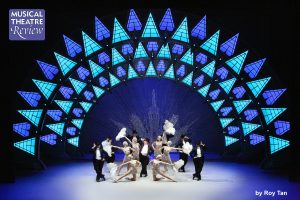
It used to change often and it would depend on whether it was a bit that I was in or a bit that I was watching. I love the transformation in ‘Stairway to Paradise’ from the small dinky cabaret in Montmartre to Radio City Music Hall where Henri has this amazing moment where all his dreams come true. The showgirls and the feathers and the men in top hats and tails. For me, that was a real MGM musical Broadway moment. I always just wanted to join on the end of that kick line.
How different was it learning the choreography for musical theatre compared to what you are used to?
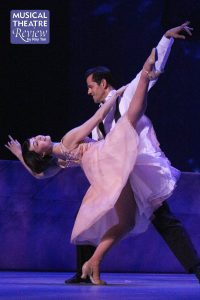
Learning choreography has never been a problem for me. I’ve got a brain to pick up choreography, learning the script was a lot harder. It was also learning choreography that you had to do eight times a week which was a tough thing because in a ballet you may perform something, at most, 30 times and know that the end is in sight. Whereas with this show, it was performing it eight times a week for a year-long run or longer, as we did on Broadway. It’s knowing how to pace yourself, knowing that the choreography needs to look fresh and new every night and still technically good and artistically good. It wasn’t so much the learning of it, it was the endurance, knowing that is was a marathon not a sprint.
Picture: Roy Tan
How hard was it going from a dancer to a stage ready triple threat?
You’re channelling a different part of your brain, script work was hard. During tech and previews, the creative team was allowed to change as much as they wanted, so you would do a performance that night and the next morning you would come in and you’d have ten new pages of dialogue that they had decided to change. You have to learn that dialogue and then it goes in either that night or the one after. Choreography, I could change, that was absolutely fine, but scripts were a lot more difficult for me.
Now that I’ve done a couple more auditions, as an actor, script learning is getting easier. I don’t think it’s ever going to be my strength, but I’m definitely finding ways around it and learning things. It’s not the same as learning steps because you’re not just learning words, you’re learning what the words mean and as long as you know the meaning of everything you’re going to say, you retain it a lot better.
Were there many differences between performing it on Broadway and in the West End?
It didn’t change too much, the biggest difference was in London the stage was raked, so learning to negotiate that slant while dancing in pointe shoes was quite difficult and the stage was bigger too. Other than that, there wasn’t too much of a difference, the show didn’t change really. I guess it was nice to be back with Robbie [Fairchild] again as we opened the show together.
Obviously, a whole new cast of British actors and dancers made a difference, in that you’re not going to get a carbon copy of each performer, so it was nice to adjust to everyone else’s performances. As a standard blueprint of the show, it didn’t change too much at all.
Do you have any particularly memorable experiences from your time in the cast?
Opening nights for both of them were really special. On Broadway they have all these traditions that you do on opening night, they have something called, ‘The Gypsy Robe Ceremony’. They have this huge robe which almost looks like a dressing gown and each show that’s opening that season gets a patch from the poster or something to do with the show, on this robe. The person who has been in the most shows on Broadway in your cast gets The Gypsy Robe and has to run around in a circle three times and touch everyone’s hand. It’s an old Broadway tradition, it was all very crazy. I think we had 12 people making their Broadway debuts in An American in Paris so that was very special.

Picture: Roy Tan
In London, there didn’t seem to be as many of those traditions, but for me, it was bringing the show home which made it extra special here. I grew up in Bath and my birthday present was generally trips up to London to see a show, so suddenly finding myself in a West End show was very emotional and full circle really. So both of them special in their own ways.
Would you want to do more musicals?
Absolutely! I think in this day and age we need light entertainment in our lives, we need that escapism and musicals are the perfect antidote for that. I absolutely adore the West End for its musicals and for its plays as well so it’s definitely something I would like to explore.
What would your dream role be?
I would really like to play Roxie in Chicago, I think she is the antithesis of Lise. A murderess, American woman who doesn’t care who she stands on to get to the top. It would be nice to get my teeth into something totally different. I would really like to do a play of some kind, I’ve been seeing a lot of plays since the show closed. Venus in Fur was incredible and Natalie Dormer is one of my favourite actresses. I don’t know if I have a favourite as such, but powerful, strong roles for women are something I’d like to get my teeth into.
Readers may also be interested in:
Review – An American in Paris – arriving in cinemas on 16 May
SHARE THIS POST:





Comments are closed.