
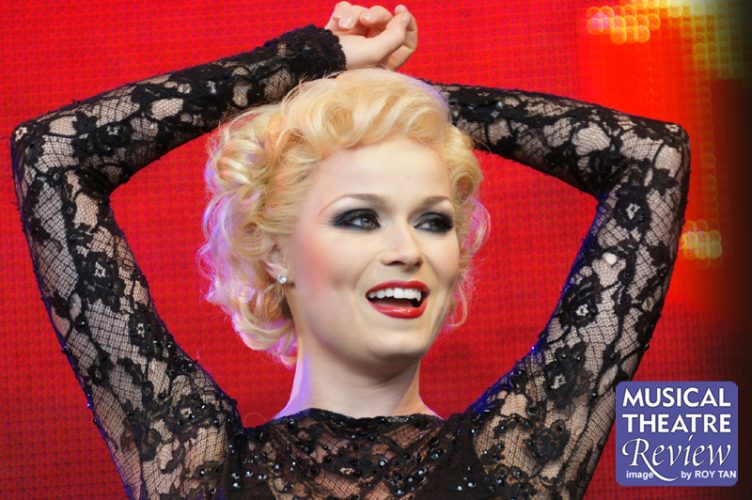
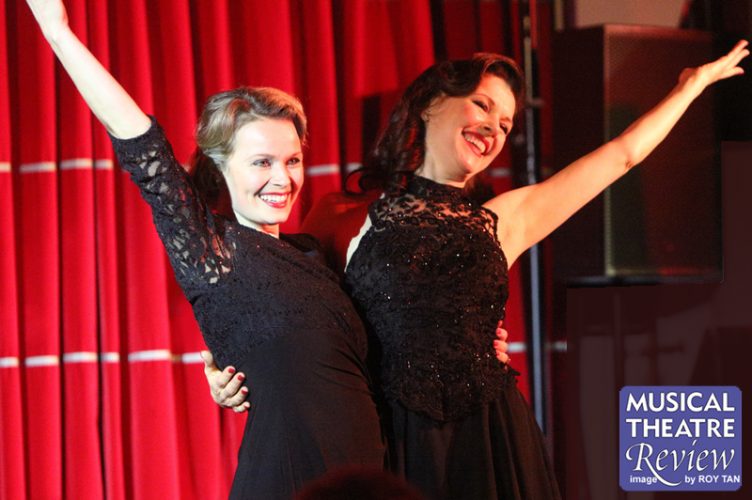

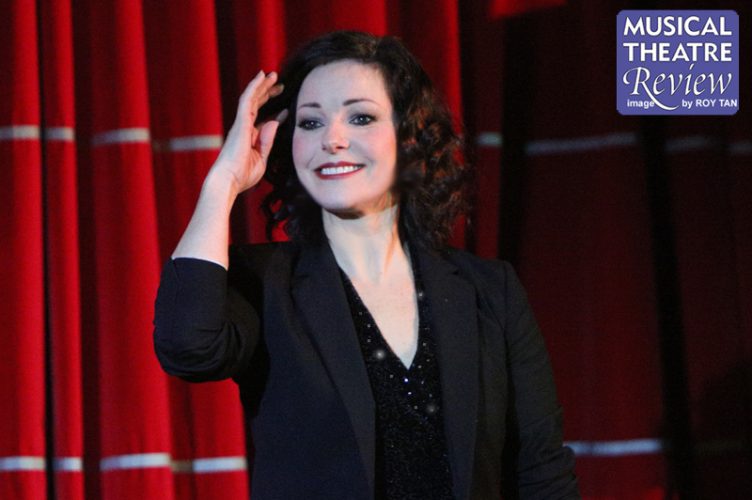

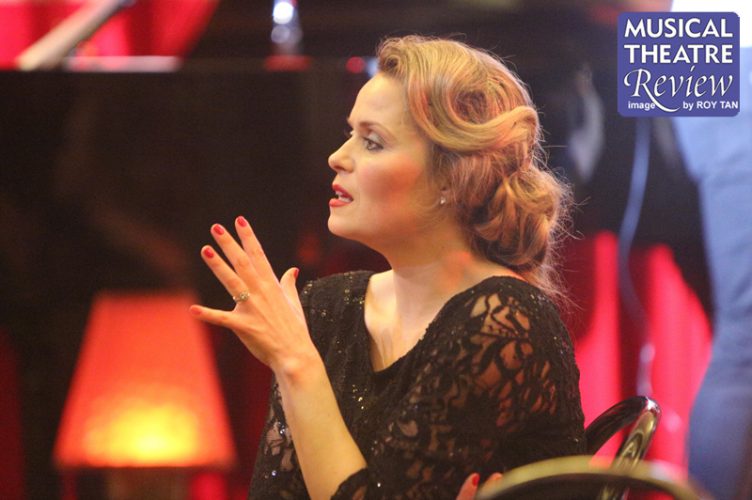
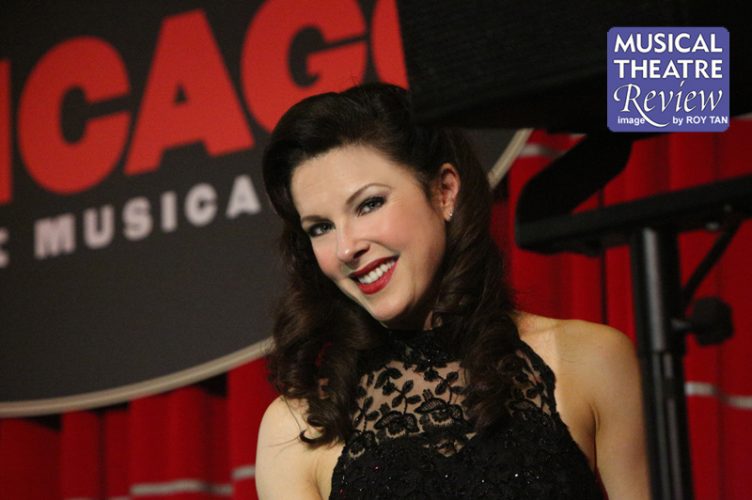
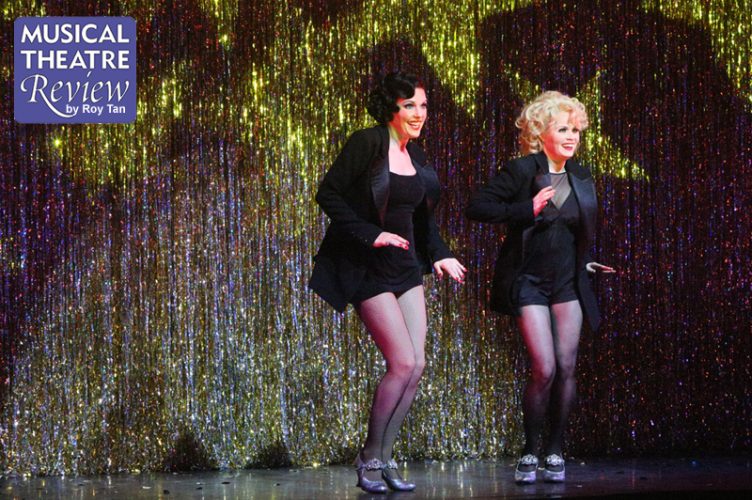

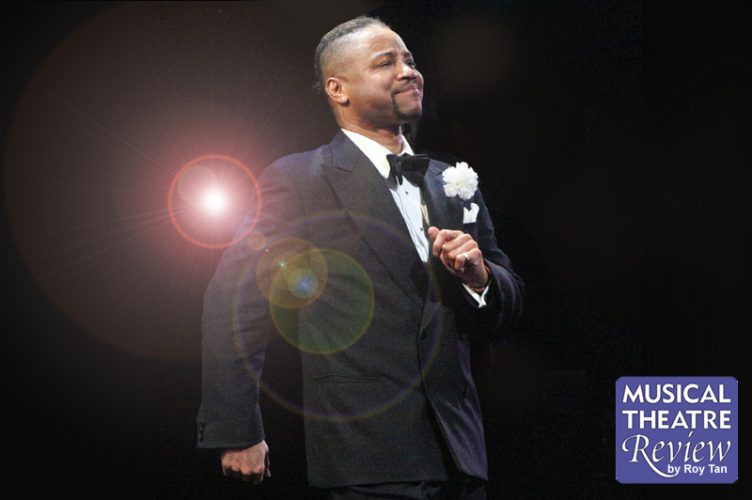
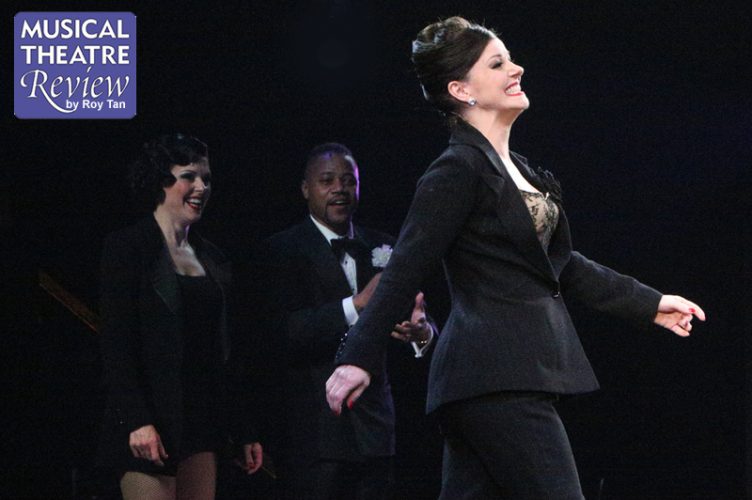
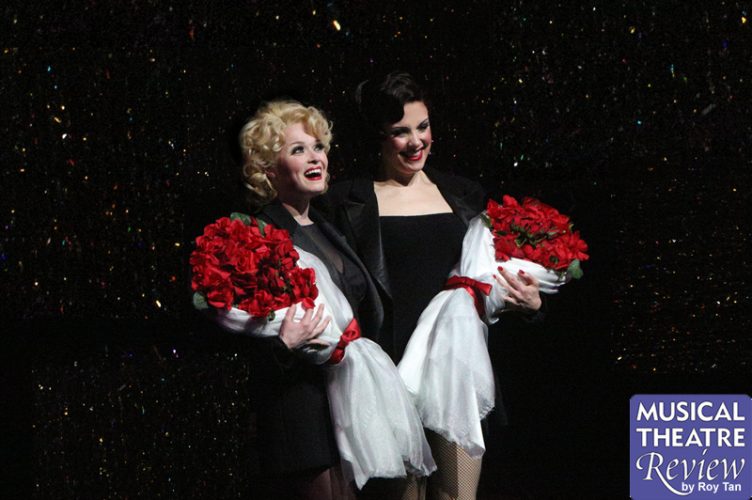
After five years away, Bob Fosse and Kander and Ebb’s Chicago has found a new home at the Phoenix Theatre and has its official opening tonight (Wednesday 11 April 2018). The cast is led by Josefina Gabrielle as Velma Kelly, Sarah Soetaert as Roxie Hart, Oscar winner Cuba Gooding Jr as Billy Flynn and Ruthie Henshall makes Chicago history by taking on her third role in the show as Matron ‘Mama’ Morton.
Based on a play of the same name, Chicago is inspired by articles written by Maurine Dallas Watkins who wrote about the trials of accused murderers Beulah Annan and Belva Gaertner for the Chicago Tribune. The scandal turned these women into minor celebrities which in turn inspired the show that we’ve come to know and love today.
At the West End launch, Tal Fox had a chance to chat to some of the stars of the show (picture by our official photographer Roy Tan).

Ruthie Henshall
How does it feel to be returning to Chicago?
Absolutely brilliant. I did pause when I thought about it, and then I realised it’s such a part of my history, and I love the show so much that it’s a real no-brainer. I’m coming to a brand new company and they’re going to be out of this world. And to have an Oscar winner [Cuba Gooding Jr] in the West End playing Billy Flynn, he’s just going to smash it. It’s lovely to be a part of this company; the two women have both been Roxie before, and of course Josefina is now playing Velma, so everybody in it has a love for the show so it’s just pure and utter joy.
When you joined the cast, did you know that you were making Chicago history?
No, I didn’t, but it’s really rather lovely. I’m selfish and greedy and got to have it all. These are three phenomenal female roles and in a phenomenal show.
What’s it like to be able to do the show from the perspective of three different characters?
They’re all so different. It’s Roxie’s story, Velma has all the money numbers, and Mama just swans in and out of control. They are three phenomenally strong female roles, you can’t believe your luck when you get to play one of them, but to play all three, that’s insane!
Do you have a favourite?
I can’t tell you at the moment because I haven’t played Mama yet. Out of Roxie and Velma, definitely Roxie because it’s more the actress role, it’s her story, but as I said Velma has all the money numbers, she comes out, kicks her legs, does something fabulous and buggers off to the dressing room.
How different has your approach been when approaching these three characters?
Well they are very different characters but every single one of them is a manipulator, even Mama. She loves her girls but at the end of the day it’s about the money and making the money. Once again it’s really relevant, the first time we opened, it was just after the OJ Simpson trial, people getting away with murder. It just seems to be so relevant all the time.
What can we expect from your Mama Morton?
It’s very hard to say because I’m really just trying it for size at the moment in rehearsals. She’s the woman in charge, she’s got a heart and she has to because she’s looking after all these women and they’re not just money to her, she really does care. There’s got to be a human side to her, she can’t just be this mercenary warden.
There’s less dancing for you this time around, how do you feel about that?
I am so glad I don’t have to cartwheel eight shows a week. I thought maybe I would miss it but I haven’t yet, let’s put it that way. I really love doing something a little more… still.
What is your favourite part of the show?
For me, it’s Roxie’s show but Mama gets to come on, crank out a number, boss everyone around and then go off to her dressing room, so that sounds pretty good to me.
Do you take inspiration from previous Mama Mortons?
No, not at all, because I’m not physically anything like anybody who has played it before, that I have seen. I have to do something completely different, it’s trying to find her power. The ones that I’ve seen are just so different.
How do you keep a show like Chicago fresh for new audiences?
Every night is different and that’s live theatre for you and there’s such a different reaction. You realise that people are paying a lot of money to come and see a show that they have or haven’t seen before and you owe it to them, and to yourself, to give it 150%. We get to do showbusiness for a living and how dare we do anything else than give it our all because so many people would love to be doing it. I can’t believe my luck so shame on anyone who phones it in.
What’s it like to be part of such a female-driven cast?
Incredible! And you’ve seen Cuba, he’s going to absolutely smash it. Barry and Fran [Weissler] never ever disappoint with their casting. Since the very beginning they have brought in people that make you say: “What, really?!?” Then they bring a whole new audience and a whole new game.
Do you think the story has new meaning in this era?
Yes, very much. The women are in control in this show and that’s really lovely and very powerful.
Have there been any changes or updates to the show?
Always little changes but it remains basically the same. Every time the creatives come over you get to just tweak things and change just little bits and pieces. It’s the age old thing, if it ain’t broke, don’t fix it. It works so they don’t need to play with it too much.
You’ve played the show on Broadway, do the audiences respond to the show differently than British audiences?
Huge, because the cultures are so different. We’re very polite and we sit back and watch. The Americans sit forward in their seats and are very vocal. The first time I went to Broadway, I was like, “Oh my goodness, listen to this reaction!” We just have very different cultures, we speak the same language but we couldn’t be more different.
 Josefina Gabrielle
How has it been returning to familiar territory?
Very interesting. I did it for the first time 18 years ago and the last time I was involved in it was the tenth anniversary which was just over ten years ago. Now it’s back and it’s fantastically nostalgic and exciting to be part of it. It’s a new role for me but it’s still the same territory. It’s very energetic, lots of dancing, lots of singing, lots of energy, so it’s like coming home but new at the same time. It’s so thrilling and so unexpected, so there’s a real surge of excitement.
A lot has changed in the world since you last did the show so do you think there’s new meaning to it now?
Not a new meaning, it’s a meaning that comes round and round because the whole reason this show came about was because of sensationalising crime stories. Velma Kelly and Roxie Hart were inspired by a book by a journalist who Mary Sunshine portrays in our production, who was writing about these trials. Her writing was so compelling and so fascinating to the public that they became popular figures and they got away with murder. Now social media makes overnight sensations faster and faster. It’s like Chicago was always ahead of the game.
How would you describe Velma Kelly?
When the show starts, Velma is Queen B, top dog. She’s the role model for the perfect person to create. Billy Flynn, Mama Morton and the whole system have created this character, this persona that the public and the jury see and she’s just waiting for her trial date. She intends to follow Billy Flynn’s training, then she will be let off, become a celebrity and get away with murder. Roxie Hart enters the prison, learns the ropes very quickly and topples Velma off the top spot. Throughout the show it’s the pair of them reinventing and surviving to get that top spot, to get away with murder.
Do you plan on drawing from your previous experiences in the show?
Last time I played Roxie so I feel the whole style and the world we’re in is very familiar, but it’s very interesting to see the other person because both characters are self obsessed, it’s about survival and making the world about them. It’s very interesting to walk away from Roxie and see it from Velma’s point of view and now be defending Velma. That’s fun and interesting.
Chicago has been around for such a long time, how do you keep audiences coming back?
Just tell an honest story, you can’t go wrong. You don’t need to change anything, just tell the truth. The audience, myself included, can see this show over and over again because every person who comes into it brings another story. The vocabulary of the show is so big that when the associate director and choreographer come to the show, they play to your strengths and what you will bring to Chicago, so it gets a fresh interpretation every time.
Can you compare playing Roxie and Velma?
From my experience so far, it makes me think that Roxie is a marathon runner and Velma is a sprinter. When Velma is on stage, it’s high energy straight away. Roxie is a slow burner all the way through the show.
This isn’t your first experience with a Fosse musical, do you enjoy the style?
I love Fosse! I have a strong classical ballet background and his style has evolved from ballet so it’s the most satisfying thing. What he could do and what he did requires a lot of isolations, so it’s the shoulder moving on its own, a hand, a head, and all of that is so satisfying to do and a lifetime’s work to achieve. It’s wonderful.
Do you think you want to do a third run as Morton?
Who knows? I wouldn’t say no. Let’s get Velma off to a start first. I’m thrilled to be working with Ruthie Henshall though, I’ve admired her for a very long time so I’m very excited to share a stage with her and sing a song with her.
 Sarah Soetaert
How has it been coming back to the role?
It’s great and really special. I feel really privileged and grateful to be able to play her again.
What’s it like being in such a female-driven show?
It’s great, really inspiring, and the women I’m working with are strong women so it’s wonderful.
How would you describe Roxie?
I would describe her as impulsive, spontaneous, ambitious.
Roxie isn’t the only role you’ve played in Chicago…
No, I originally played Hunyak, which I loved, then I played Mona which I loved even more. Then I left and then I came back to play Roxie.
What do you think it is about Chicago that keeps audiences coming back?
It’s a classic piece, it’s a timeless piece and it’s got so much class and danger. It’s sassy, sexy, fun and we’ve got great music and stunning choreography. It’s really classy and sophisticated with the band on stage, no set, just jazz and everyone in black. It’s just less is more. It’s like a classic movie, the ones that everyone sees over and over. It always rings true, I think Chicago is one of those.
As an actor, what can you do to keep Chicago new?
I think it’s guided by direction and the choreographers and the creative team to explore those avenues together. Just living and bringing life, my life.
How much did you know about Chicago before you first joined the cast?
When I got the job then I explored it and read about it. I hadn’t done Fosse style but I knew about his style and I knew about Chicago. The homework really began when I started the job and looked into the journey it had made, how it had been revived and the story that came from this journalist in Chicago that wrote about these actual women.
Returning to the choreography, how are you finding Fosse?
Wonderful. As a dancer, that’s how I trained, it’s incredible to do the style and I love the technique.
Is it quite different from other dance roles?
Yes and it’s got such a signature to it. You can straight away see when something is done in the Fosse style.
Is it harder or easier than other styles?
It’s hard. It’s incredibly hard to make it look easy. It takes a lot of hours to get it perfect. To make it just right, in sync, every little detail, every little shimmy, every little hand, every little finger correct.
What’s your favourite scene from the show?
I have so many. That’s really hard and it changes too. I’m going to go with ‘Nowadays’ at the very end of the show. It’s a moment where a lot happens in a very short period of time and I really like it, the vulnerability, the hope,the journey, the change.
If you got another chance to come back to Chicago again would you want to play Roxie again or try another character?
Roxie, every time! I mean, I don’t know, people change. You think you know something until other situations present themselves but she’s just a dream role, she’s a dream character to play.
Do the women in the cast compare notes on playing the characters?
No, we’ve shared stories and what happened when we played it in the past but not necessarily how one does it. We’re all unique, we’re all different and we all play it in our own way.
How is it working with Cuba Gooding Jr?
He’s fabulous. He’s such a generous actor and he’s just so incredible and he is one of those people who raises the bar so that you’re all there.
 Cuba Gooding Jr
[He’s saying ‘theatre’ in a British accent] Are you practicing your British accent while you’re here?
Yeah, what else am I doing, except singing and dancing as Billy Flynn.
What made you want to be in a musical?
I wanted to come to London and be on the West End stage. Never in a million years did I think it would be in a musical. So when my agents called and said Chicago, I said, “I’m in!” I’m a little scared but I’m in and I think if you’re not scared you’re not doing enough. There’s something about preparing for a performance that needs to feel dangerous because then you’re paying attention to everything you need to do.
This musical has been around for as long as it has because these songs are infectious. As soon as we go into the room and hear the first few chords of the piano, you’re in character, it transports you back in time.
Why the West End rather than Broadway?
One, I was offered the West End first, but two, there’s something so traditional here. Shakespeare was born here, Sir Laurence Olivier, I was like: “Are you kidding?” It was one of those things where I had to come for that, let alone the whole experience of doing a musical. It was the perfect storm of opportunity for me.
How familiar were you with Chicago before you joined the cast?
I wasn’t at all. I’d seen the movie but now I’ve seen the show. I spent two weeks on Broadway with the show, I would rehearse in the afternoon and watch the show at night and fell in love with certain performances from, ‘Mr Cellophane’ to ‘We Both Reached for the Gun’. I loved that and now I’m here.
Mama Morton, Roxie, Velma, these set piece production numbers, not just the music but the dancing and choreography of it. Bob Fosse did such a brilliant job of melding jazz and other forms of expression in the musical’s choreography that works for this musical in a way that not many others achieve.
You’ve gone from playing a man on a trial for murder to a man defending people on trial for murder, did your experience help you prepare for this role at all?
Yeah, so that’s the dark side of things, but it’s all presentation. Courtney B Vance’s Johnnie Cochran was a grand master of ceremonies and that’s what Billy Flynn is, so it was nice to have him set the pace for my performance here.
What has been the toughest part of preparing for the show?
Jet lag. I’m still not sleeping through the night, it’s brutal. I think it’s because I’m still connected with the outside world, my agents are in New York and I live in LA so people call me and text me and I don’t turn my phone off because I want to make sure I’m available to them. It’s the hardest part.
What part have you enjoyed the most?
The rehearsals, the dancing, the choreography, the singing. Today’s launch was so magical, to really see people connect to things. I’ve done it in front of other people and they look glassy eyed because they’re looking at other things to critique. People were just smiling.
What do you think audiences should know about Billy Flynn?
He’s a manipulator, he’s charismatic and before you know it, you’re in love with him.
He’s portrayed as the puppet master but it’s actually a very female-driven story, do you find that this affects the dynamics of the show?
I think a lot of themes tackled in this are still relevant today, female empowerment and having to stand up to the system to be heard. I think that’s why this show has been around for so long, it’s still relevant today.
How does being in a musical compare to the other roles you’ve done?
Everything that I’ve done has been about memorising your lines and inserting mannerisms so that we can find the truth in the story. This one, once you get to that stage, then you get to the choreography stage, then you get to the vocal training stage. It’s just been more in depth than any other role that I’ve done in my career.
Tickets for the West End production of Chicago are available HERE.
SHARE THIS POST:





Comments are closed.