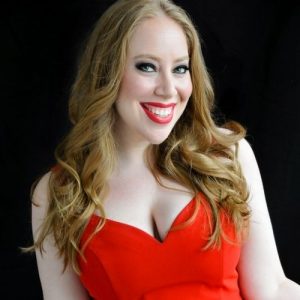
 JENNIFER ASHLEY TEPPER – the acclaimed young theatre writer and historian – recently released her new book The Untold Stories of Broadway, Volume 4 to commemorate the one-year anniversary of the 2020-2021 Broadway shutdown.
The Untold Stories of Broadway, Volume 4 – featuring interviews with Patti LuPone, Lin-Manuel Miranda, Donna Murphy, Jonathan Groff, Julie Taymor, the late Hal Prince and many more – is an oral history discussing everything that makes theatre essential, told through the lives of each Broadway theatre.
This new edition explores how shows like Fiddler on the Roof, Falsettos and A Raisin in the Sun fought for social justice through art. It also digs into the funniest bloopers from Les Misérables and the craziest legends from Studio 54’s days as a nightclub.
Yet it also keeps in mind how politics have affected theatre, from the Federal Theatre Project to satirising presidents on stage, in addition to reflecting on how has Broadway made it through other tough times in history.
Musical Theatre Review’s Nick Wakeham wrote:
“Captivating and so interesting, this is one of those books that you start to read and simply cannot put down. Absolutely fascinating and one that I will treasure.”
This new edition includes over 30 new interviews, with theatre professionals ranging from producers, actors and stage hands, to writers, company managers, dressers and designers. A portion of the book’s proceeds benefits The Broadway Advocacy Coalition, the theatre community’s response to racism and police brutality.
Tepper also served as producer of the viral Broadway musical Be More Chill, part of her decade-long collaboration with Tony Award-nominated composer Joe Iconis. She is also the creative and programming director at Feinstein’s/54 Below, where she has curated or produced over 3,000 shows.
She conceived and directed The Jonathan Larson Project, which features rare and unknown songs by the Pulitzer Prize-winning writer of Rent; it received an original cast recording from Ghostlight Records. She is historian consultant on the upcoming movie of Larson’s tick, tick… BOOM!
Tepper recently received a 2020 Lincoln Center Emerging Artist Award and placed on Backstage’s first annual “Broadway Future Power List”.
Here Jennifer continues Musical Theatre Review’s interview series: Five Questions With…
How did life treat you during lockdown?
Just like most of us, I’ve rode the lockdown rollercoaster – some times over the last year were really hard, and some times were wonderful. It’s difficult to believe that it’s been more than a year now of life as we knew it ceasing to exist. I’m really grateful that my family has stayed healthy and safe, and I’m really grateful I’ve had a close circle I’ve been able to depend on during the past year.
I’m also grateful to everyone who helped make The Untold Stories of Broadway Volume 4 happen – it was not easy to write a book during quarantine, but I was so inspired by the interviewees and those working on the book, as well as readers who I wanted to share these stories with.
All of the trauma and isolation of the past year has not been easy for anyone, and I hope we remember to be kind to each other as we move forward into the next era. I think there is an extraordinary time ahead for our art form and our industry but it’s also going to be a huge challenge to rebuild and rethink so many things. I am feeling hopeful about the future, and also aware of the huge challenges that lie there.
 The latest volume of The Untold Stories of Broadway was published to commemorate the one-year anniversary of the 2020-2021 Broadway shutdown. It must have been a bittersweet experience writing this edition and sending it out into the world?
Absolutely. Writing a book about the theatre during a time when theatre is shut down was an emotional experience. I loved having the opportunity to share so many different kinds of stories illustrating how essential and extraordinary theatre is. That felt more important than ever.
It was also fascinating to examine so many things we were experiencing, through a historic lens. The Untold Stories books always contain tales that are parallel to current events, and those were particularly fascinating to explore in 2021 when we were able to look at everything from the history of racism in theatre criticism to the advent of radio plays. When you learn that ‘will giving people the ability to hear a play in their home mean they stop attending plays in person?’ was a question folks were asking a century ago about radio plays, and think about how this reflects on the conversation about streamed theatre today, you are reminded that there is so much to be unexpectedly gleaned from the past.
I’m always so excited when one of my books is published to share the stories with others in person at readings and events, and it’s been sad not to have that during this time of quarantine. It was sad not to be able to connect with human beings in person or see shows or experience the theatres themselves as I was writing as well. But on the other hand, the book itself exists in the same way as it would in any other year. Books have a permanence that is comforting, and I’m so glad this one will always be accompanied by the story of having been written during the pandemic.
The book has a lighter side – the funniest bloopers from Les Misérables, for example – but also tackles theatre’s relationship with social and political issues, both in the past and right up to the present day, including the Black Lives Matter movement. Can you tell us more about that?
It has always been important to me to amplify marginalised voices in these volumes. The 2016 Broadway production of Shuffle Along, Or The Making of The Musical Sensation of 1921 And All That Followed really changed my life and my perspective as a theatre historian and a professional in general. I dedicated my third book to the makers of that show for that reason. It made me strive to go deeper in figuring out what stories were not being told and who was forgotten from the history books, and figure out how I could be part of giving those stories and people a microphone.
When I’m conducting interviews, doing research, writing, and putting the book together, I try to think about how issues related to social justice, politics, racism, sexism and homophobia intersect with the stories of these shows and productions. Theatre is not divorced from the world – even the most seemingly light-hearted production might have something valuable to explore about deeper issues if you look closely. I try to pay attention and let the volumes chronicle what is honest to both history and present, as guided by the shows and professionals at hand.
You have also enjoyed a successful career as a director (The Jonathan Larson Project), programmer (Feinstein’s/54 Below) and producer (Be More Chill). I believe you are also a consultant on the movie of Jonathan Larson’s tick, tick… BOOM! How did your love affair with Broadway begin and develop?
I grew up in South Florida and became obsessed with theatre at a young age when I was lucky enough to go to theatre camp and be taken to local productions of shows. I began to collect cast albums and read every book about theatre I could get my hands on. I loved poring over liner notes and learning about different musicals and their teams and histories. I went to a high school with a fantastic theatre department and was fully immersed in the art form, performing in shows, competing at Thespians, and taking multiple drama classes.
I learned at a young age that even though I loved being part of a cast and participating in performances, being a professional actor was not my career goal. More than anything, I loved discovering musicals and sharing them – I knew I wanted to be a part of making new musicals happen, spreading knowledge about shows, celebrating under-appreciated musicals, and so on… and figured out that I’d have to forge my own path to make that happen.
It has been a devastating year for Broadway, how do think it can recover and change moving forward?
I think that the comeback will be gradual and include a lot of experimenting with new ways of doing things. There are a lot of considerations that many people want to prioritise in terms of making sure practices in theatre are safe, anti-racist, equitable, and viable for a show’s existence, given all that we’ve learned. Broadway has never been shut down for even close to this amount of time—- rebuilding the entire industry is going to require such support from the government, from the city, and so on. What happens next with our industry – including what theatre gets to exist in the future, whose jobs come back, where opportunities go, which venues are able to reopen and stay open, and so on – is hugely dependent on what larger infrastructure exists to help.
Readers may also be interested in:
REVIEW: The Untold Stories of Broadway, Volume 4 – Jennifer Ashley Tepper (Dress Circle Publishing). Star rating: five stars ★ ★ ★ ★ ★
SHARE THIS POST:


Comments are closed.