In February this year, it was announced that playwright MARK RAVENHILL, along with Robbie Williams and his songwriting partner Guy Chambers, will collaborate on the Royal Shakespeare Company’s musical theatre version of David Walliams’ best selling The Boy in the Dress, debuting in Stratford-upon-Avon later this year.
Directed by the RSC’s artistic director Gregory Doran, the musical will receive its world premiere from 8 November 2019 until 8 March 2020 as part of the prestigious theatre company’s 2019 winter season.
Below, read Musical Theatre Review editor Lisa Martland’s recent interview with the show’s librettist Mark Ravenhill, plus watch a brand new video also featuring the writer, plus Robbie Williams, Guy Chambers, David Walliams and Gregory Doran discussing the project.
Could tell me a bit more about how you got involved with writing the libretto for The Boy in the Dress?
Well, I was writer in residence at the RSC for a couple of years. It was during that time that I started to look around for a good book to adapt for the family slot. I just asked a friend with kids: “What do your kids love reading?” He said: “They just love all the David Walliams books.” I just went off to the bookshop. The first title that really leapt out at me was The Boy in the Dress, because it seemed quite Shakespearian apart from anything else.
I just read it in one sitting, and I loved it. I thought it was fantastic. I thought it would make a great show as well. Then I sent it to Greg Doran and said: “I think this is the one I want to do.” I went to meet David Walliams and told him I’d like to do it and he told me he’d always wanted it to be a musical. I was really excited because I really like musicals and the RSC does them so well.
What do you think it is, I mean obviously you read that book in one sitting and you particularly liked that one, saw potential in that to adapt it for the stage, and then after that to give it a musical treatment. His books, I was looking at a list the other day of the top 100 books, I think, from 2018, and I knew his books were successful because my daughter’s 17 now but when she was younger she read them all the time. I don’t think I realised quite how successful, how many, how they were until I read that list.
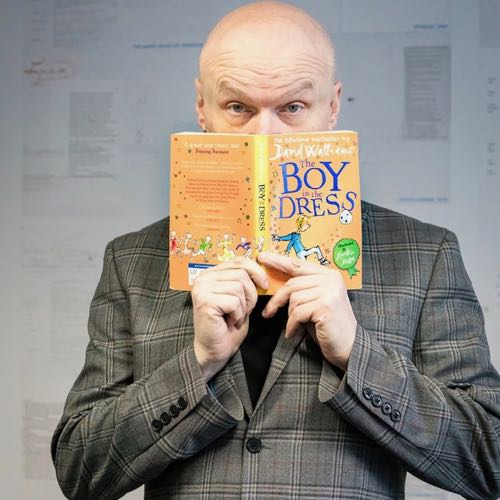 What do you think it is about David Walliams books that kids enjoy and that also opens them up to stage adaptation?
He’s just a great storyteller and the books are written from a very heartfelt place. Obviously he’s got a great facility with jokes, but he’s got a great heart as well. I’ve probably read The Boy in the Dress about 30 times now, and I think when you’re adapting something, sometimes halfway through the process you get a bit fearful and think: “Oh, God. What if I go back and read the book and discover on the 25th reading that I don’t like it anymore, it’s not as enjoyable as it was?” But every single time it just comes back again fresh and makes me laugh out loud and get a bit weepy in places.
I think one of the qualities of the books is that the author doesn’t dumb down stuff for kids, aspects of the stories are a little bit dark and edgy.
I think he’s very cheeky and quite naughty and fresh. I don’t think you feel like you’re being talked down to by an adult. I think if anything it feels like a friend or slightly naughty older brother telling you a story.
And there’s the message of acceptance at the heart of the book.
It’s a very open, charming of saying each of us is different and we can all get along together and accept each other for who we are. It’s a very simple thing, in a way, to say, but he does it with great charm, ease, wit and warmth. It is an important thing to be said, I think. He does it without feeling didactic, it feels genuine and fresh.
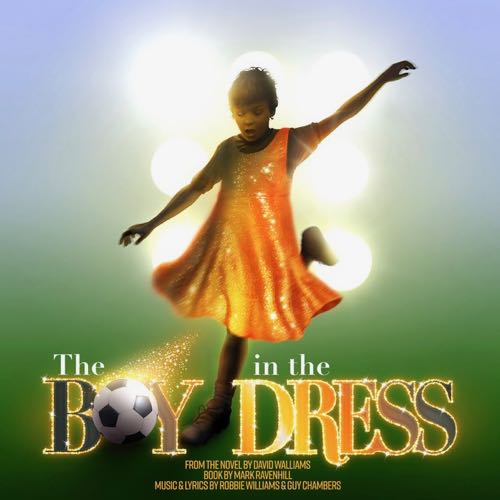 Music has often played a part in your work but has writing a full-blown musical been something you have always fancied doing?
It has totally always been on my wish list, I just needed to find the right material. This is really a book musical comedy. That’s always something that I’ve wanted to do. As is the same with lots of people, musicals provided some of my first theatre experiences and even before that I was watching films as a kid, things like Chitty Chitty Bang Bang, Mary Poppins and Bedknobs and Broomsticks. Then I was able to buy the albums and play them all day long.
Are you rediscovering your enthusiasm for the genre by doing this project?
Yeah. As an audience member, I’ve been consistently going to see musicals, but to actually have the chance to work on one is great.
Do you know Robbie Williams and Guy Chambers already?
Robbie came to my birthday party 20 years ago. Somebody that I was working with was a friend of his. He turned up at my little flat in Camden, the doorbell rang, and my mate just said: “Oh, this is my friend Rob.” I said hi, turned around and thought: “Hang on a second. That’s Robbie Williams.”
I had never met Guy but I was obviously very aware of the name because I’d always followed what Robbie was doing. There was always this name, songs written by Guy Chambers and Robbie Williams. Guy was the slightly more mythical, behind the curtain, Wizard of Oz figure for me.
I actually bumped into David Walliams nearly as long ago in Fresh and Wild inn Camden. This man came up to me and said: “Are you the playwright? I really like your plays.” I thought: “I’ve seen you in something on television…” It was just before Little Britain became big.
We’ve been working together on The Boy in the Dress for about two years – in workshops and meetings and going off and doing drafts of the script and songs. As a piece, there’ll still be a few little edits and rewrites, but essentially 99% of all the writing is done.
 When the RSC announces anything musical theatre related, a lot of people start saying: “Will it be the next Matilda?” Do you have to put something like that completely out of your mind, because you’ve got your own vision for this with Robbie and Guy?
I think obviously on one level you do. You just have to say it’s this book, it’s this story we’re telling, and we’re telling it for this season in Stratford. It will find its own form and it will find its own audience. On that level, you have to not think about Matilda.
I think one of the great things is that Matilda has actually been a great training school for young talent. Quite a lot of our characters are just that couple of years older than those in Matilda. We’ve got great potential to draw on that talent pool.
Did you have a particular feel for how you wanted to go about adapting the story, and the style of it? Did it offer any particular challenges?
Really it was just about finding a stage language that captured the freshness and openness and wit of David’s book. I think it’s actually really well suited to the theatre, because it’s sort of set in the real world, but it’s also a world of its own invention. It’s David Walliams’ land, which is a fantastic place to be. It’s really just listening to the tone of the book and finding a stage language for that.
One of the reasons why I was drawn to the book in the first place was that it has just the right amount of story and characters for a stage show. Often when you adapt something, you’re having to explain to a novelist that you’re going to have to lose half their characters and cut half of their scenes. I knew we wouldn’t have to disappoint the original writer or the audience who loved the book. I think kids want all the recognisable elements from the story in stage versions. Many kids will have read this book hundreds and hundreds of times.
I know you’re committed to new work in your career, but what’s it like being part of doing that within the RSC and the way they’re passionate about it?
I think the great thing about a musical is that it really does draw on every department of a building, so music, wigs, costume, make-up, sound, everybody. It asks 100% of them. I think a musical is just a great focus point for a big company like the RSC to absolutely show off every single department and every single person in the building coming together and working full stretch.
- Mark Ravenhill’s credits include: For the Royal Court: Shopping & Fucking (& Out of Joint), Product (& Paines Plough), Shoot/Get Treasure/Repeat (& Out of Joint/Paines Plough), Over There (& Schaubühne, Berlin).Other theatre includes: Mother Clap’s Mollyhouse, Citizenship (National); Pool No Water (Frantic Assembly/Lyric, Hammersmith); Life of Galileo, Candide (RSC)


Comments are closed.