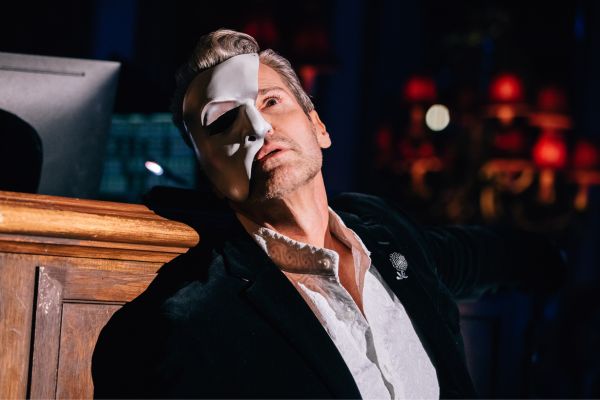
 Broadway legend HUGH PANARO, who starred as Andrew Lloyd Webber’s Phantom at over 2,500 performances, has not performed in the West End for 26 years since starring in Show Boat in 1998.
Now he is back with the UK premiere of Hugh Panaro – Man Without a Mask, a highly personal scrapbook of a life and career, taking audiences backstage, into dressing rooms and right to the heart of Broadway.
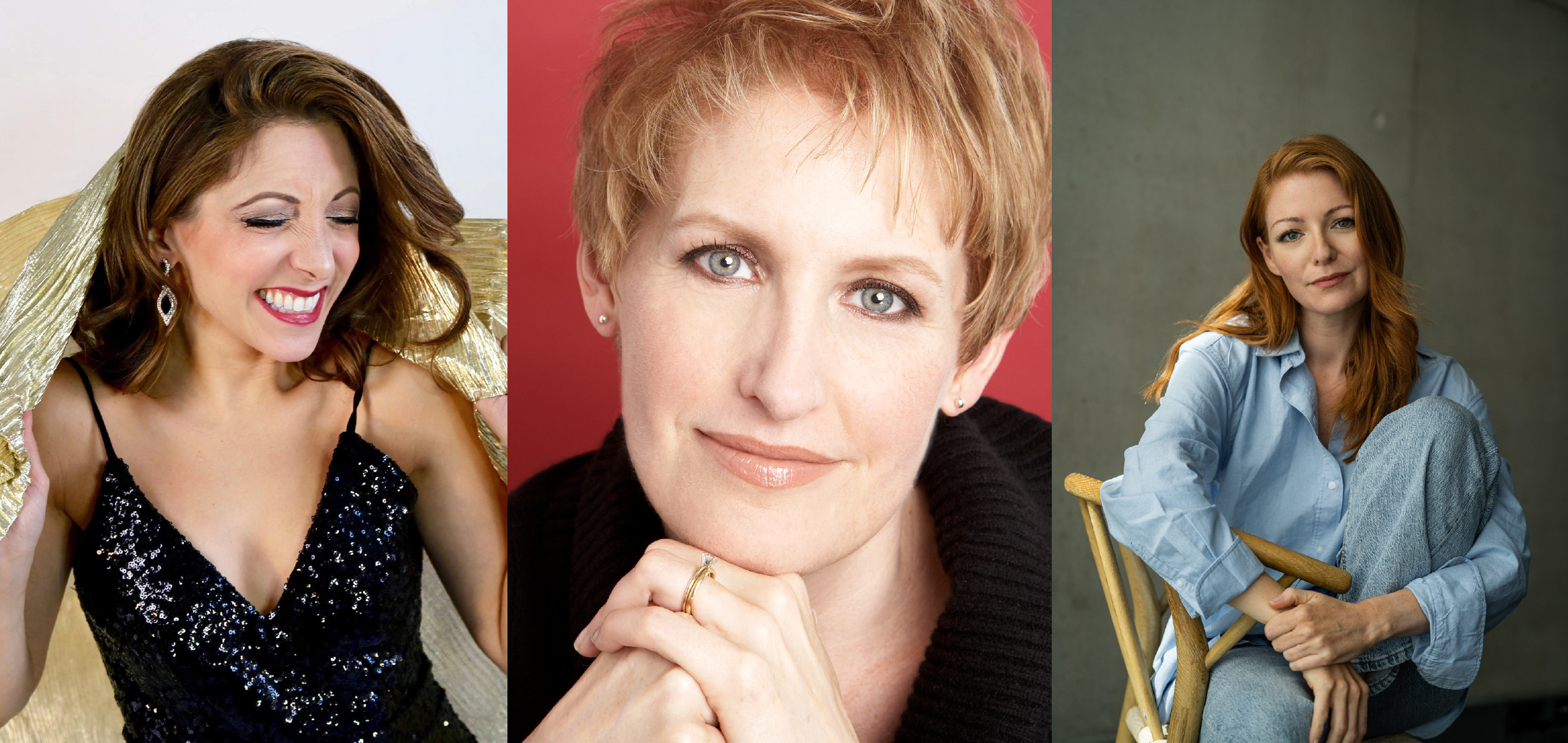
The show, which plays at London’s Crazy Coqs from 7-9 September 2024, features songs and plenty of stories from all the blockbusters he’s known for… and even some shows he wasn’t in, including playing The Phantom in The Phantom of the Opera and, before that, Raoul – cast in both roles by the show’s legendary original director, Hal Prince. Stars of West End, Broadway and cabaret, Christina Bianco (7), Liz Callaway (8) and Laura Pitt-Pulford (9) will guest star.
Hugh made his Broadway debut as Marius in the original production of Les Misérables. He also created the roles of Buddy in Side Show, Julian Craster in Jule Styne’s The Red Shoes, and the title role in the American premiere of Cameron Mackintosh’s Martin Guerre. He was nominated for an Outer Critic Circle Award for his performance in the titular role of Elton John’s Lestat.
He made his West End debut in 1998 as Gaylord Ravenal in the London company of Harold Prince’s Show Boat, a role he previously played on Broadway.
The talented singer has performed on concert stages across the globe, including touring with Barbra Streisand throughout Europe. His musical director is the gifted Joseph Thalken and his “up close and personal” show is directed by his longtime friend, Richard Jay-Alexander.
Hugh recently made his solo concert debut at New York’s 54 Below and his performance was captured live on the recently released album titled Hugh Panaro – Man Without A Mask, available on all music platforms.
He will be in conversation with Edward Seckerson after his closing show on 9 September.
Here Hugh continues Musical Theatre Review’s interview series: Five Questions With…
Can you tell our readers more about your show Man Without a Mask and how you have gone about picking anecdotes and songs to include?
Of coarse, I’d love to! Man Without a Mask has been a collaborative journey with my longtime friend and director Richard Jay-Alexander and my wildly talented musical director and friend Joseph Thalken. It has been an embarrassment of riches and initially, quite overwhelming! We started with a master list of songs that span my entire Broadway career as well as songs that I have loved singing since I was 12 years old. But don’t worry, we’ve narrowed it down, I promise…
It’s all incredibly personal and while there are no “filler” songs, we have also been very respectful of certain career expectations so as not to disappoint. The stories and anecdotes cover everything from my early dreams of becoming a veterinarian to singing with my idol Barbra Streisand, from some mega-hits to some even bigger mega-flops, from Stephen Sondheim to Elton John to Andrew Lloyd Webber and it’s all 100% true!
Transitioning between stage roles and concert performances requires different vocal and emotional demands. How do you prepare for performing in a more intimate venue?
What a great question, especially since I’m coming to the UK directly from a huge symphonic show call Cirque Goes Broadway. I was just performing at a huge outdoor venue the size of a football stadium where you have to reach audience members seated so very far away. I cannot wait to perform at Crazy Coqs because you are literally a few inches away from the audience and it gives you the opportunity for so much subtlety, nuance, and intimacy.
Vocally and dynamically you can also rein it in as well and give the audience the feeling they are right there in your living room. I think the common denominator for me is that no matter where I’m performing, my goal is to embody the song, the character, the moment emotionally and truthfully. So Crazy Coqs is right up my alley and I’m crazy excited.
You’ve portrayed the title role in The Phantom of the Opera on different occasions. How has your approach to the character developed over the years? Does anything about the Phantom’s story resonate with you personally?
Another great question since I revisited the role of the Phantom several times at different points in my life. Interestingly, it was my performance as Gaylord Ravenal in Hal Prince’s Show Boat at the Prince Edward Theatre in the West End that led to my first time “donning the mask” in the Broadway production.
I had just gotten home from the six-month run in London and Hal called and said: “Hugh, after seeing you in London, I think you now have the gravitas ( I love that word) to play the Phantom, if you’re interested?” Of course, I jumped at the chance! I was just settling into the role when I was cast as Martin Guerre in the American premiere, so sadly I had to leave Phantom prematurely. A few years later, I got my second shot at the role and that’s when I really started to explore.
I also was given a wonderful book by a Phantom “phan” that became my “bible” for the role. It was the Susan Kay novel Phantom, and there was so much potential “backstory” that resonated with me, especially Erik’s love of animals, specifically his childhood dog. But there are also many other aspects of the Phantom that resonate personally, being horribly bullied as a child and teenager is just one I will share.
I have a dear friend who played Elphaba in Wicked and we have compared notes on numerous occasions about how the cruelty of the world has made these characters feel so disenfranchised, rejected and unworthy of love. I think this a huge reason why so many people identify with these iconic misunderstood antiheroes. I certainly do.
You’ve had the opportunity to play a wide range of characters in musical theatre. Could you pick one or two that have been particularly challenging or transformative for you as an artist?
The role that immediately comes to mind is titular role in Sweeney Todd. I had taken over the role from my “bestie” Norm Lewis in Bill Buckhurst’s brilliant immersive Off-Broadway production that started in the UK at Harrington’s Pie and Mash shop and made its way across the pond. I have always tried to bring as much of myself to every role as possible to bring them to life. But with Benjamin Barker, aka Sweeney Todd, I had to do the complete opposite.
Bill Buckhurst trusted me with this role and in turn, I trusted Bill to help me fulfil his vision for this particular Demon Barber of Fleet Street. This required stripping me of a lot (almost all) of my humanity and “light” to bring this Sweeney to life (or rather death). For seven months I tucked “Hugh” away and lived in Sweeney’s dark universe. The payoff was well worth the challenge and it was one of the most artistically rewarding (albeit dark) moments in my acting career. Thanks Bill!
What advice would you give to young performers who aspire to have a career in musical theatre?
This answer may seem like a contradiction after what I just said about Sweeney Todd, LOL. But, while there may be the exception to every rule, I would say to bring as much of your authentic self to every role as humanly possible. Every artist is unique and has to be “captain of his own ship”. My acting teacher called it your “special self”. You cannot do anyone else’s work but your own. If I tried to do Michael Crawford’s performance as the Phantom, it would merely be an imitation, it would not be authentic to me, Michael Crawford, or the audience. It’s tremendously scary to be open and vulnerable but I truly believe it is also our greatest “super power” as an actor.
Tickets for Hugh Panaro – Man Without a Mask are available HERE.
SHARE THIS POST:


Comments are closed.