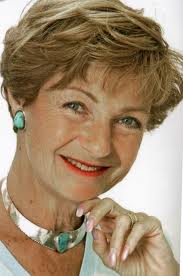
Ruth Leon discussed the history of cabaret in From There to Here at the St James Theatre Studio, London
Ruth Leon: From There To Here at the St James Theatre Studio, London.
The first London Festival of Cabaret is proving not just a vehicle for the best performers from either side of the Atlantic to serenade us, but an instrument for education as well.
First came masterclasses from Maria Friedman and Barb Jungr, and on a wet Saturday afternoon an illustrated lecture at the St James Studio by Ruth Leon, the ever-gracious host at the Crazy Coqs, on the history of cabaret, ended the fourth week of a Festival which is to have a welcome second instalment next May.
Author and broadcaster Leon took us from cabaret’s beginnings at Le Chat Noir in Paris in the early 1880s to its current renaissance in Britain’s capital.
Considering the filthy weather, a very decent-sized audience braved the elements to listen to her, among them Steve Ross, the ‘Prince of New York cabaret’, Domenick Allen, the man who, with wife Leigh Zimmerman, kicked off the Festival at the same venue a month ago, and the American singer/pianist Daryl Sherman.
Leon’s journey started in Paris with Yvette Guilbert, Charles Trenet, Josephine Baker and Maurice Chevalier (who off camera dropped the pidgin English of ‘Thank Heaven For Little Girls’ to converse totally sans accent) before moving to the sleazier Kabarett of Germany and the more political world of Kurt Weill and Bertolt Brecht.
Between the two World Wars the music-based, ‘is she wearing knickers?’ froth of the Moulin Rouge, where Mistinguett’s fabulous legs were insured for half-a-millon francs, was superseded by the word-based satirical Berliners, only to die with the end of the Weimar Republic when the focus of the cabaret world moved across to New York and Chicago, where jazz, vaudeville and the Cotton Club thrived and names like Sophie Tucker and Jimmy Durante ruled.
Britain had its own form of cabaret, better known as music hall, which took place mainly in variety theatres, although there was The Cabaret Club in a London basement which became known as the Cave of the Golden Calf, where dinner jackets were de rigueur – “almost but not quite a gay club”.
Over here the genre was carried on by Gracie Fields – “whose voice hurt my ears” – George Formby and Flanagan and Allen. Leon also brought in Stanley Holloway which was the cue for an anecdote involving Rex Harrison when the two actors were starring in My Fair Lady.
Emerging from the stage door on a rainy evening, Harrison was approached by a female fan and asked for his autograph. “I’m not doing autographs tonight,” replied the haughty Harrison. The lady persisted, saying she had waited a long time in the wet. This time Harrison told her in no uncertain terms where to go. The lady responded by hitting him with her rolled-up programme, at which point Holloway commented that Harrison had made stage history that night – “it’s the first time the fan has hit the sh*t!”
Leon also told us how Noel Coward came to be a cabaret performer. His plays were going out of fashion, but with his career in temporary eclipse, an offer to do a one-man show in Las Vegas – “singing not for cafe society but for Nescafe society” – reinvented the Master and led to such witty cabaret staples as ‘Don’t Put Your Daughter On the Stage, Mrs Worthington’ and ‘Mad Dogs and Englishmen’.
The Second World War changed everything and the focus moved back from a devastated Europe to brave-new-world America where everything was possible. Writers like Irving Berlin, Richard Rodgers, Cole Porter, Yip Harburg, the Gershwins, Harold Arlen and many others; singers such as Ella Fitzgerald, Cab Callaway, Lena Horne, Billie Holiday, jazz men like Duke Ellington and Louis Armstrong… it was a time of incredible riches for popular music.
Cabaret was the domain of Bobby Short and Mabel Mercer – “nobody came away unchanged from seeing her” – and that tradition was later carried on by the elegant Steve Ross, currently in London for a two-week residency at Crazy Coqs.
Mercer’s phrasing was a major influence on Sinatra and many others, and it was this English-born singer, her father a black American jazz musician she never knew, who, according to Leon, defined what cabaret really was – “an intimate experience where one performer sings just for you and if the connection isn’t made, it doesn’t matter how well the singer sings or how careful the choice of songs, if the audience don’t like you, it doesn’t work.”
That was why, claimed Leon, Edith Piaf never really won over the States. “The Americans like to like people and Piaf was just not likeable.”
Jeremy Chapman
www.londonfestivalofcabaret.com
Check out reviews of other performances in the London Festival of Cabaret:
Maria Friedman Masterclass – St James Theatre
Steve Ross – Ridin’ High – Crazy Coqs
Michael Feinstein and Friends – Palace Theatre
The Three Shonas – The Pheasantry
Alexander Armstrong and His Band Celebrate The Great British Songbook – St James Theatre Studio
SHARE THIS POST:


Comments are closed.